Protests erupted again across Bangladesh’s major industrial areas after thousands of garment workers rejected a six-member wage board announced by the government on Sunday, November 1. Workers continued their heated protests, demanding that the minimum wage be raised to 30,000 taka, equivalent to approximately US$241.
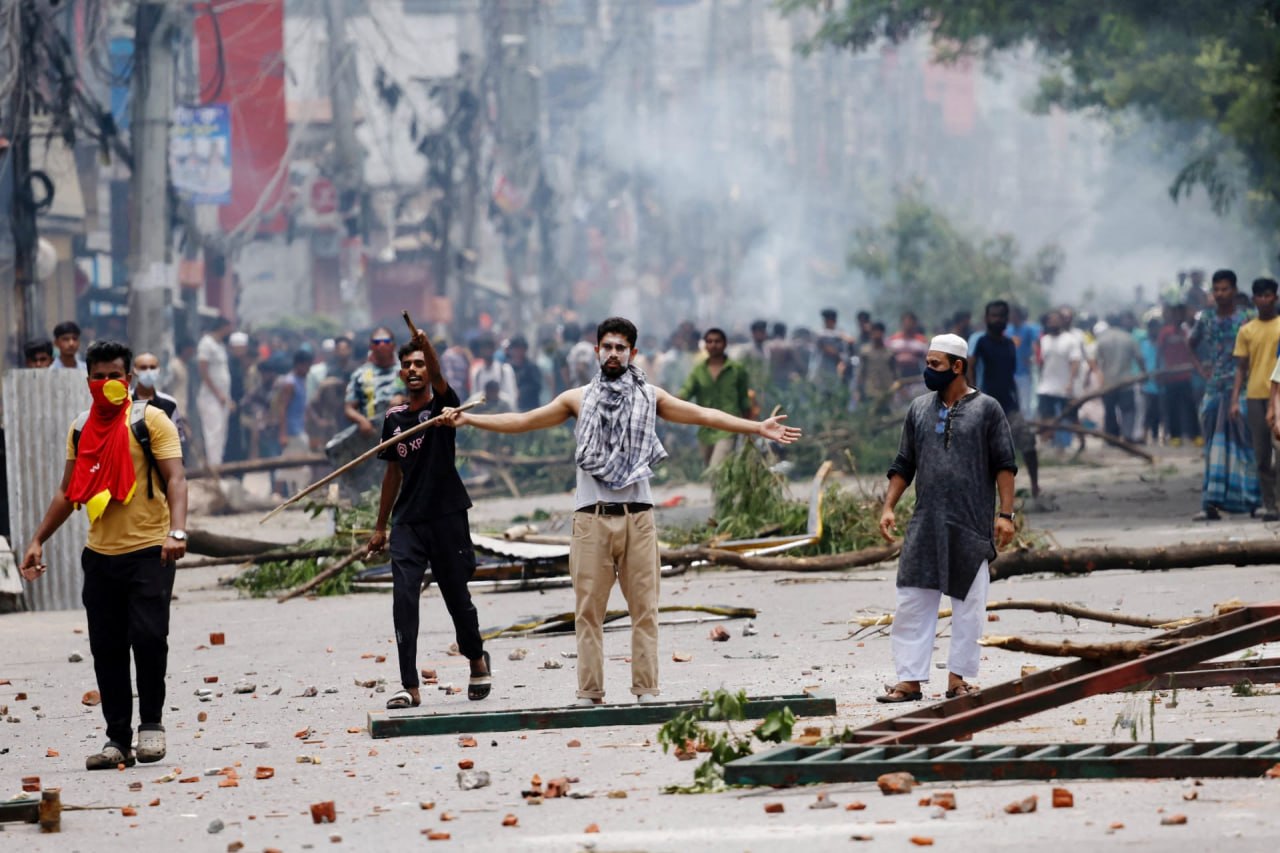
The demonstrations severely disrupted transport networks and operations at many factories. Protesters blocked roads and clashed fiercely with police, throwing bricks and setting fire to a police outpost, vehicles and factory property, forcing around 30 factories to close.
The workers’ anger stems from their demand for a minimum monthly wage of 30,000 taka, more than twice the current wage of 12,500 taka, or approximately US$100. Workers say the relentless rise in food, rent, transport and healthcare costs has left their daily lives in serious hardship.
Bangladesh’s garment industry is the world’s second-largest after China. It employs around four million people, most of them women, and generates more than 80 percent of the country’s total export earnings. Article: Rithy